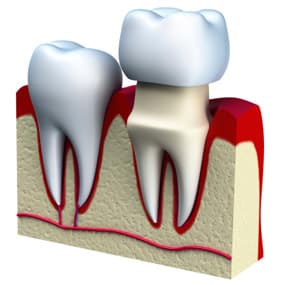
A dental crown is a custom-made cap that fits over a damaged or weakened tooth, covering it completely above the gumline. It restores the tooth's shape, strength and appearance, and protects what is left of the natural tooth from breaking further. Crowns are sometimes called "caps."
Below, we explain when a crown is needed, how the different materials compare, and what happens at each step of getting one, including how we make a crown in a single visit with CEREC technology at our Calgary offices.
When Do You Need a Dental Crown?
Your dentist may recommend a crown when a tooth is too damaged for a filling to hold up on its own. Common reasons include:
- A cracked, broken or badly worn tooth
- A large cavity, or a large old filling that is failing
- A tooth that has had a root canal and needs protection
- Anchoring a dental bridge that replaces a missing tooth
- Completing a dental implant, where the crown is the visible tooth
- Improving the look of a misshapen or discoloured tooth
Crown, filling, or inlay/onlay?
A filling repairs a small area of a tooth. A crown covers the whole visible tooth. In between are inlays and onlays, sometimes called partial crowns, which restore part of the chewing surface when a tooth needs more than a filling but not a full crown. Your dentist will recommend the most conservative option that will hold up.
Types of Dental Crowns
Crowns have been made from many materials over the years. The main options today are:
- All-ceramic (porcelain) crowns: metal-free and the most natural-looking option. Ceramic is translucent like enamel and can be shade-matched to your teeth. CEREC crowns are all-ceramic.
- Porcelain-fused-to-metal (PFM) crowns: a metal core with a porcelain outer layer. The metal adds strength, but it can show as a dark line at the gum over time. PFM crowns are always made by an outside lab.
- Gold and other metal alloy crowns: very durable, but they don't look like a natural tooth and also require lab fabrication.
At Living Wellness Dental, we take a biological approach to dentistry, which means we consider how a material affects your whole body, not just your tooth. Most of the crowns we place are metal-free ceramic, but the right material depends on the tooth, your bite and any sensitivities you have, and we'll talk through it with you.
How a Traditional Crown Is Made
With a conventional crown, the process usually takes two appointments a couple of weeks apart:
- The tooth is numbed and shaped to make room for the crown.
- You bite into a tray of putty to make a physical impression.
- The impression is sent to an outside dental lab, and you leave with a temporary crown.
- About two weeks later, you return to have the temporary removed and the permanent crown cemented.
Temporary crowns are held in loosely so they can be removed. While wearing one, you may need to avoid chewing on that side or eating certain foods.
Same-Day Crowns: How CEREC Works
CEREC (Chairside Economical Restoration of Esthetic Ceramics) is a computer-aided design and milling system that lets us make your crown in our office while you wait. There is no outside lab, no putty impression and no temporary crown. A typical visit looks like this:
- Preparation: we numb the tooth and remove decay or damaged structure to make room for the crown.
- Digital scan: a small camera wand captures a 3D digital impression of your teeth. There is no impression tray to bite into, which helps if you have a strong gag reflex.
- Design: your dentist designs the crown on a chairside screen, setting its shape, size and fit against your bite, and you can see what it will look like.
- Milling: our in-office milling unit carves the crown from a solid block of ceramic in about 15 minutes.
- Finishing: the crown is stained, fired and polished to match the colour of your natural teeth.
- Placement: the crown is bonded to your tooth, and we check and adjust your bite so it feels natural.
From start to finish, a same-day crown visit takes about two hours. Learn more about CEREC same-day crowns at our offices.
Is a Same-Day Crown Right for You?
CEREC works for many crowns, but not every one. A conventional crown may be the better choice if:
- A fracture extends below the gumline
- The tooth takes heavier bite force, such as some molars, and a stronger material such as PFM or gold suits it better
- Your situation calls for a material CEREC doesn't mill
We'll explain the trade-offs for your tooth before you decide. For a closer look, read CEREC Crowns: Advantages and Disadvantages and Same Day Crowns: What Is CEREC and How Does It Work?
Caring for Your Crown
A crown needs the same care as a natural tooth. The tooth underneath can still decay where it meets the gum, so keep that area clean:
- Brush twice a day and floss daily, including around the crown's edge
- Keep up with regular checkups and cleanings
- Avoid chewing ice, hard candy or fingernails, and don't use your teeth to open packaging
- Tell your dentist if you grind or clench your teeth, which puts extra stress on crowns
Dental Crown FAQs
Is a crown the same as a cap?
Yes. "Cap" is an older, informal name for a dental crown.
Does getting a crown hurt?
The tooth is numbed before it is prepared, so you should feel pressure rather than pain during the procedure. Some tenderness afterwards is common and usually settles within a few days.
How long does it take to get a crown?
A traditional crown takes two visits, usually about two weeks apart. A same-day CEREC crown is done in one visit of about two hours.
How long does a dental crown last?
That depends on the material, where the tooth is, how hard you bite or grind, and how well the area is cleaned. Regular checkups let us spot wear or problems early.
Can an old metal crown be replaced with ceramic?
Often, yes. See our article on replacing metal crowns with CEREC ceramic crowns.
Book a Crown Consultation in Calgary
If you have a cracked, broken or heavily filled tooth, an exam is the first step. We'll tell you whether you need a crown, which material suits the tooth, and whether it can be done the same day. Same-day CEREC crowns are available at both our Dorchester and Northland offices. Request an appointment to get started.
 From Our Blog